|
Bures-online.co.uk |
|
 |
|
|
||||
|
|
|
|
Definition of the Poor:- the sick, the disabled, the elderly. the mentally ill, the unemployed,the underemloyed, the seasonally employed, widows, vagrants, orphans, gypsies and ilegitimates. BURES ST MARY WORKHOUSE In 1706 Glebe Terrier, records indicate
two small cottages for the Poor were located in the High Street, possibly
at the top near its junction with Cuckoo Hill. 1709 Glebe Terrier again: 1729 Glebe Terrier now mentions
a further Poor House 1760 Glebe Terrier records 1770 Glebe Terrier records 1776 Local records 1783 Local records 1784 Glebe Terrier records 1803 Local records 1813 Local records 1816 Local records 1817 Local records 1823 Local records 1826 Local Records 1831 Local records 1834 Local records 1838:- As mentioned earlier, The
Manse stands on the grounds of the workhouse. Records show there was no
Manse at this date, so the Workhouse must have still been running 1841:- Records indicate the property at this time was no longer the Workhouse. 1858:- "The
Manse in connection with the said Chapel, 24th July 1858" - confirms
the Manse was on site by this date
|
|||||||||||||||||||||||||||||||||||||||||||||||||||||||||||||||
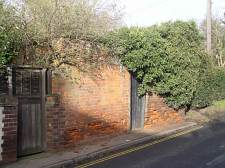
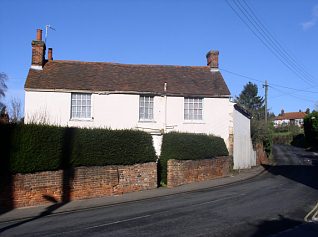 "Junipers", Site of the Bures St Mary Workhouse |
In 1776, the Bures St Mary workhouse
records |
||||||||||||||||||||||||||||||||||||||||||||||||||||||||||||||
|
***Charity Commission Papers dated 1916.
Interesting Press Cutting :- Bury & Norwich Post, January 24th 1857 |
|||||||||||||||||||||||||||||||||||||||||||||||||||||||||||||||
| BURES HAMLET WORKHOUSE | |||||||||||||||||||||||||||||||||||||||||||||||||||||||||||||||
|
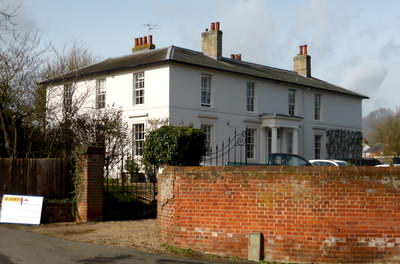
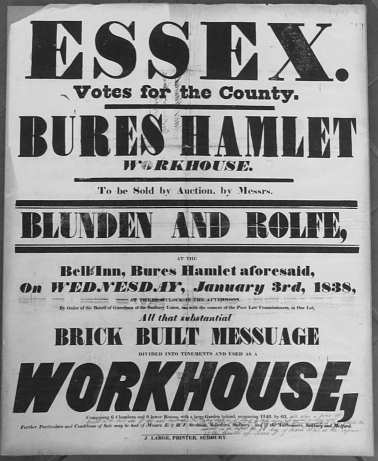
Another Bures Workhouse was located at the bottom of Station Hill in Bures Hamlet, at a location occupied by todays "White House". Records show it housing only 9 residents. No idea when it opened, but it was before 1784 (see below) In 1838, John Garrad purchased the property
from the Sudbury Union for the sum of £200 to be used as a private
residence. (see opposite >>>>) The
original Workhouse was subsequently demolished by the end of the year
and replaced with the fine building we see today. Interesting to note that this property
was once again used for public use during the 1st World War. |
|
||||||||||||||||||||||||||||||||||||||||||||||||||||||||||||||
|
Extracts taken from Parish Records:- 1709 Glebe Terrier:- "one
small cottage in the Hamlet near the mansion of Herbert Pelham, Gent worth
about £3 per year" 1729 Glebe Terrier:-"one
small cottage in the Hamlet near the mansion of Herbert Pelham, Gent worth
about £3 per year. |
|||||||||||||||||||||||||||||||||||||||||||||||||||||||||||||||
| GENERAL INFORMATION. | |||||||||||||||||||||||||||||||||||||||||||||||||||||||||||||||
|
Initially the Sudbury area employed three
workhouses: one at Sudbury for able-bodied men and boys over 13,
one at Bures for aged and infirm men and women, and one at Melford
for able-bodied females up to 16 and boys from 7 to 13. The Poor. Poor relief can be traced back as far as the 1300`s. After the Black Death (1348-9) labour was in short supply and wages rose steeply. To try and keep this in check, several Acts were passed aimed at forcing all able-bodied men to work and keep wages at their old levels. These measures led to labourers roaming around the country looking for an area where the wages were high. Some took to begging under the pretence of being ill or crippled. In 1349, an act prohibited private individuals from giving relief to able-bodied beggars. With the decline of the monasteries, and their dissolution in 1536, together with the breakdown of the medieval social structure, charity for the poor gradually moved from its traditional voluntary framework to become a compulsory tax administered at the parish level. This was the start of parochial poor relief.
The Poor Law Amendment Act (Poor Act) In 1833 Earl Grey, the Prime Minister, set up a Poor Law Commission to examine the working of the poor Law system in Britain. In their report published in 1834, the Commission made several recommendations to Parliament. As a result, the Poor Law Amendment Act was passed. The act stated that: (a) no able-bodied person was to receive
money or other help from the Poor Law authorities except in a workhouse;
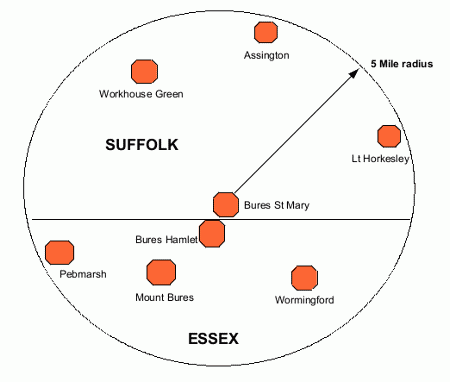
CLICK HERE to read more information about Sudbury Workhouse List of local Workhouses, circa 1776. Assington(20, Bures St Mary (50), Bures Hamlet (9), Great Cornard (20), Little Cornard/Workhouse Green(14),Nayland (40), Sudbury (30), Fordham (22), Stoke next Nayland (40), Wormingford(?) Pebmarsh (12) Mount Bures (?), Lt Horkesley(?) This is just a sample list, but it does indicate that the majority of villages had their own workhouse.
Wormingford was located
along the main Colchester Rd, whilst Lt Cornard (Workhouse Green)was
at the top of Spout Lane. Life was very grim, it was made purposefully harsh to dissuade people from seeking help. There was a strict timetable regime, usually rise at 6.00am and prepare for bed at 8.00pm. Meals were usually soup, bread and cheese, meat and potatoes. Those individuals arriving from out of the local area, were actively dissuaded from staying more than one night before being ejected and moved on. It was not unusual for paupers to trudge from workhouse to workhouse seeking refuge. Mrs Janet Frost, a Bures resident can remember vagrants making there way through the village travelling between the workhouses at Sudbury, Colchester and Nayland. Sympathetic shopkeepers, would often keep boiling water and tea handy ready for those asking for sustenance. The vagrants who travelled between Sudbury and the Colchester Workhouse used Sandy Hill at Wormingford as their halfway stop. Smoke could often be seen rising from that direction from their camp fires. People ended-up in the workhouse for a variety of reasons. Usually, it was because they were too poor, old or ill to support themselves. This may have resulted from such things as a lack of work during periods of high unemployment, or someone having no family willing or able to provide care for them when they became elderly or sick. Unmarried pregnant women were often disowned by their families and the workhouse was the only place they could go during and after the birth of their child. Some were publically flogged. In 1866 the village once again took on the responsibility of looking after its own poor by the opening of the `almshouses` in Cuckoo Hill. Bures resident listed at the Colchester (Lexden) Workhouse in 1881.
Prior to
the establishment of public mental asylums in the mid-nineteenth century
(and in some cases even after that), the mentally ill and mentally handicapped
poor were often consigned to the workhouse. Workhouses, though, were never
prisons, and entry into them was generally a voluntary although often
painful decision Definition of Glebe Terrier:- A Glebe Terrier is a term specific to the Church of England. It is a document, usually a written survey or inventory, which gives details of glebe, lands and property in the parish owned by the Church of England and held by a clergyman as part of the endowment of his benefice |
|||||||||||||||||||||||||||||||||||||||||||||||||||||||||||||||
| updated 06/12/2012 Source:- Kellys Directory Suffolk Records Office. Survey Of Suffolk Parish doc Dr Brown(dec) notes Visit Peter Higginbothams Workhouse web site at:- http://www.workhouses.org.uk for a vast amount of detailed information. Highly recommended, all you need to know about Workhouses. Stewart Malcolm (dec) for the Bill of Sale Poster updated 25/3/2017 |
|||||||||||||||||||||||||||||||||||||||||||||||||||||||||||||||